ServicesVinyl Composition Tile
Vinyl Composition Tile in League City
VCT is a tough, low-cost tile made of limestone and vinyl, laid in adhesive one 12-inch square at a time. Because each tile stands alone, a few cracked or loose ones can often be swapped out without tearing out the room. We tell you which job you actually have.
What VCT is and where it fits in a house
Vinyl composition tile is mostly crushed limestone held together by a vinyl binder, pressed into 1/8-inch-thick tiles. It is the same flooring you see in school hallways, and it earns that spot by shrugging off rolling loads, dropped tools and wet boots. In a home it makes sense in a laundry room, utility room, conditioned workshop, game room or a budget-minded kitchen.
Unlike luxury vinyl, VCT is porous on the surface. It needs protective coats of floor finish to resist stains and keep its sheen, and it shows every bump in the subfloor beneath it. Those two facts drive most of how we prep and install it.
We start every VCT call by looking at what failed and why. If six tiles popped because a washer leaked, we fix the leak damage and set six new tiles. If the slab underneath is pushing moisture up through the whole room, patching a few squares only buys a few months, and we will say so.
What our VCT work includes
- Single-tile swaps
- We warm the damaged tile to soften the adhesive, lift it without chipping its neighbors, scrape the bed clean and set a new tile in fresh adhesive. Then we roll it flat so the edges sit level with the surrounding floor.
- Color and pattern matching
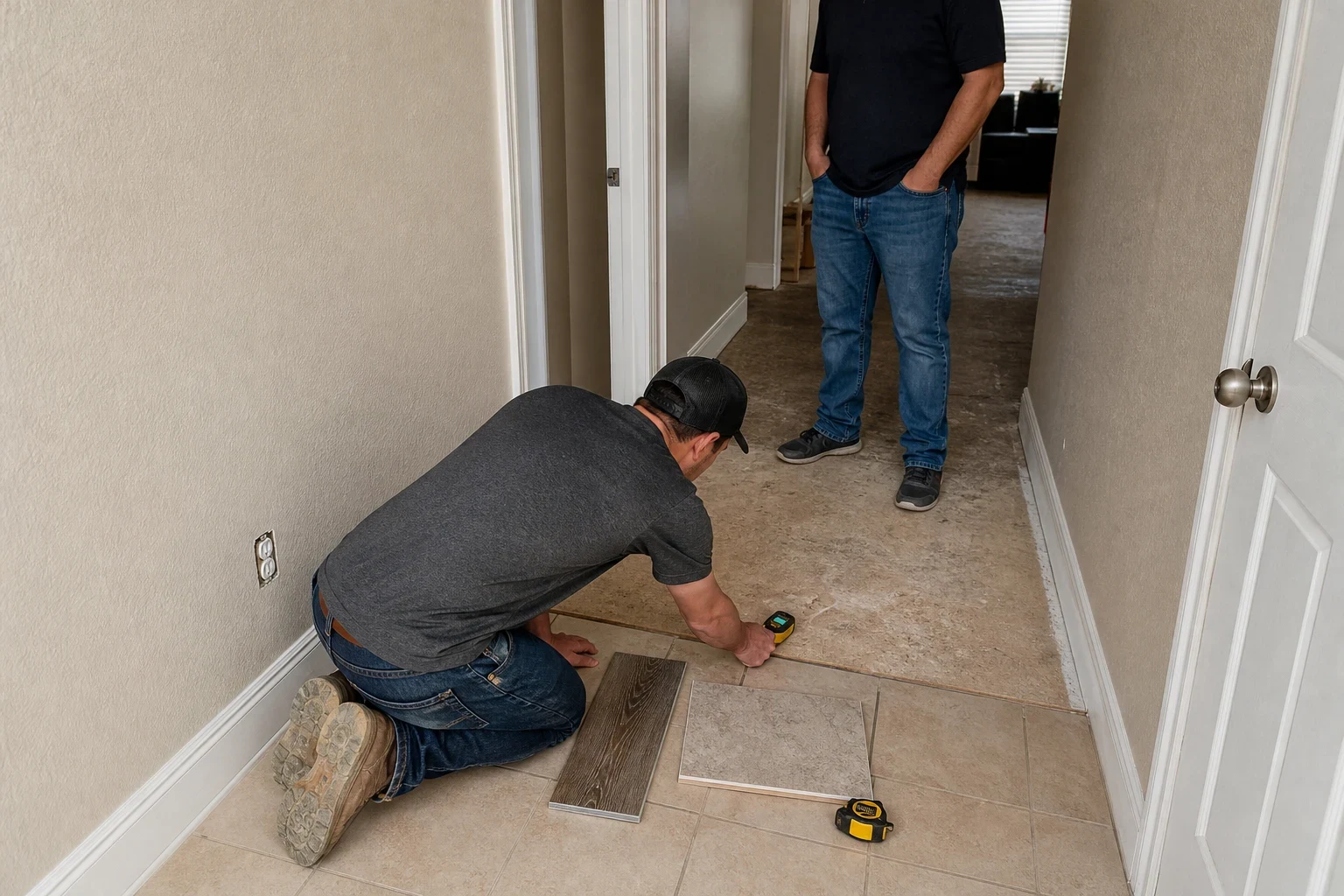
- VCT colors shift between production runs. We bring samples to compare against your existing floor and tell you upfront if a close match is not available, so a repair does not end up looking like a patch.
- Moisture testing on concrete
- On a slab, we test for moisture coming up through the concrete ahead of any full install. Too much moisture breaks down VCT adhesive, which is the usual cause of curled edges and dark adhesive lines at the seams.
- Subfloor prep
- On concrete we grind high spots and fill cracks and low areas with cement patch. On a wood subfloor we add smooth underlayment-grade plywood, because any nail head or seam will show through tile this thin.
- Full installation and first finish coats
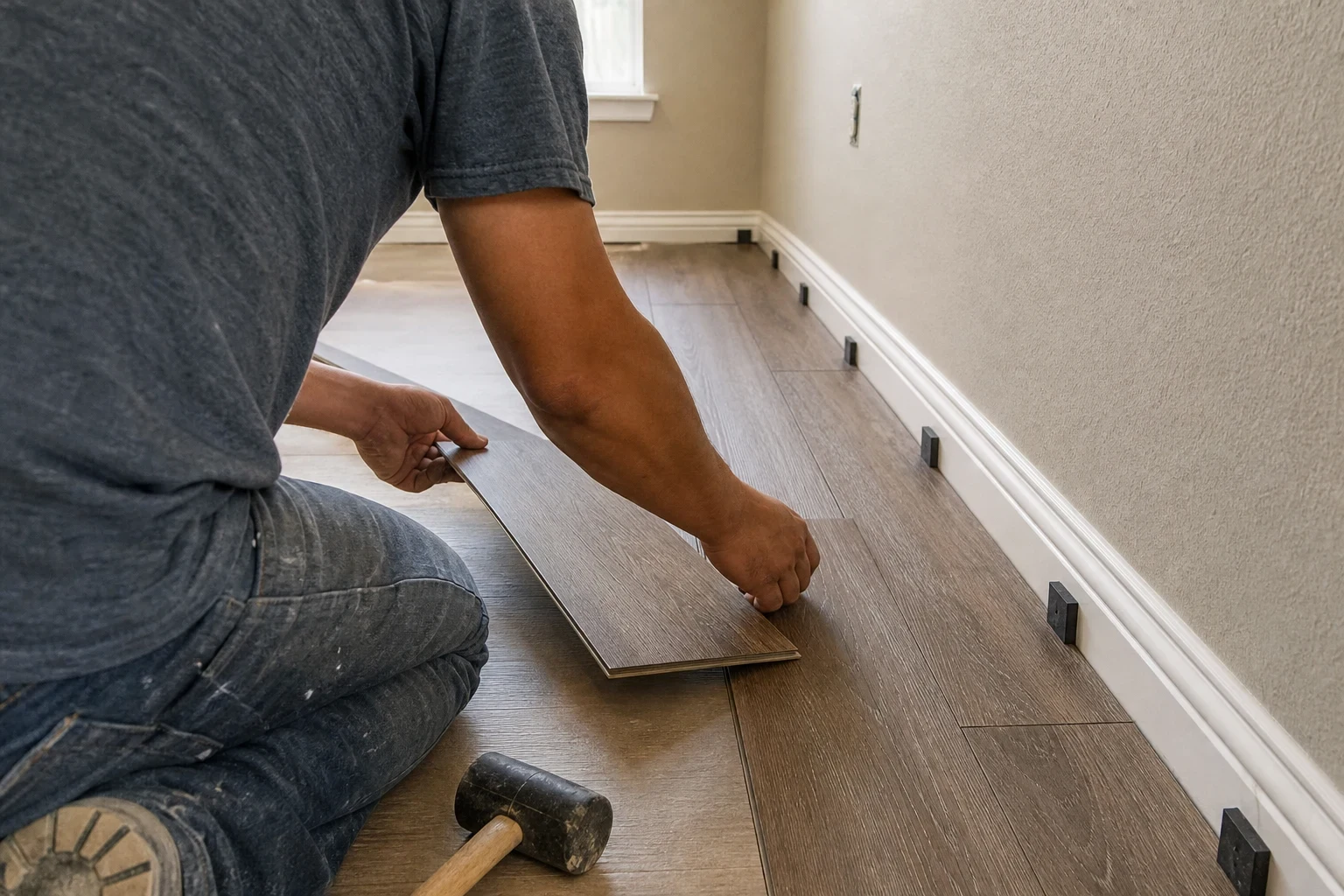
- New tile acclimates in the room for about 48 hours, gets laid in thin-spread adhesive, rolled with a heavy roller and finished with protective coats before you put furniture back.
Signs your VCT needs attention
Tiles that click or lift
A tile that moves underfoot has lost its grip on the adhesive. Caught early, it can usually be reset or swapped on its own.
Cracked or chipped squares
VCT is rigid, so a dropped wrench or a high spot in the slab can snap a tile. One crack is a repair. Cracks appearing in a line often point to a slab crack below.
Curling edges or black lines at seams
Edges that turn up, or adhesive squeezing up between tiles, almost always mean moisture from the slab. In humid Gulf Coast weather this tends to spread across the room, so it calls for testing before any patch.
Worn-through color in traffic paths
The pattern in VCT runs through the tile, but years without finish wear it dull and porous. Heavily worn rooms are usually better served by new tile than by scattered spot repairs.
How a VCT job runs
- 1
Look and diagnose
We check the loose or broken tiles, tap the surrounding floor for hollow spots and test the slab where moisture is suspected. You get a plain answer on repair versus replacement and the reason behind it.
- 2
Check older tile first
If your floor has 9-inch tiles or black mastic, it may date from an era when asbestos was used in flooring. We do not sand, grind or break that material, and we will explain testing and options such as covering it in place before any work starts.
- 3
Prep and set the tile
We clear the room, prepare the subfloor and spread adhesive, waiting until it reaches the right tack to lay tile. Tiles are set with their back arrows turned the way the pattern calls for, usually in alternating quarter-turns, then rolled.
- 4
Finish and cleanup
Protective coats go on once the adhesive has set. We remove scraps and old tile, then walk you through how long to wait before moving appliances back and how to keep the finish healthy.
What moves the price of VCT work
VCT itself is among the least expensive hard floors, so on most jobs the labor and prep matter more than the tile. A small repair is priced very differently from a full room. We explain each factor before work begins so the number makes sense.
- Repair or full room
- Replacing a handful of tiles is a short visit. A full install adds removal, prep, acclimation time and several finish coats.
- Slab and subfloor condition
- Cracks, high spots and old adhesive residue all need correcting so new tile sits flat. A slab with a moisture problem may need a moisture barrier treatment, which adds material and drying time.
- What comes up first
- Pulling up carpet or sheet vinyl is simple. Old tile that may contain asbestos changes the plan entirely and may mean covering it in place.
- Pattern and color choices
- A single color in a straight lay goes fastest. Checkerboards, borders and multi-color patterns take more layout and cutting.
Questions about vinyl composition tile
Something not covered here? (346) 409-7643
Can you replace just a few tiles instead of the whole floor?
Usually, yes. That is one of the best things about VCT. As long as the slab is dry and the surrounding tiles are still stuck down firmly, we lift the damaged squares and set new ones. The main limit is color matching on older floors.
How is VCT different from luxury vinyl tile?
VCT is mostly limestone, rigid and porous, and it needs finish coats to stay protected. Luxury vinyl tile is thicker, softer underfoot, has a wear layer built in and does not need finish. If you want a printed stone or wood look, our Luxury Vinyl Tile page covers that option.
Will VCT work in my garage?
In a climate-controlled garage it does well. In an unconditioned garage, summer heat and temperature swings can soften the adhesive and let tiles shift, so we talk through that honestly so you can decide with the full picture.
How soon can I use the room?
Light foot traffic is usually fine the same day the finish dries. Heavy items like a washer, dryer or tool chest should wait until the adhesive has fully cured, and we give you a specific time for your floor.
I think my old floor tiles have asbestos. What now?
Leave them intact and do not sand or scrape them. Older tiles are often safest covered in place with new flooring over a smooth underlayment. If removal is needed, the material should be tested by a qualified lab first, and we will explain how that affects your project.
Find out if a repair will do
Tell us what the tile is doing and which room it is in. We serve League City and nearby towns like Friendswood and Dickinson, and we will tell you plainly whether a few new tiles or a new floor is the right fix.