ServicesTile Flooring
Tile Flooring Repair and Installation in League City
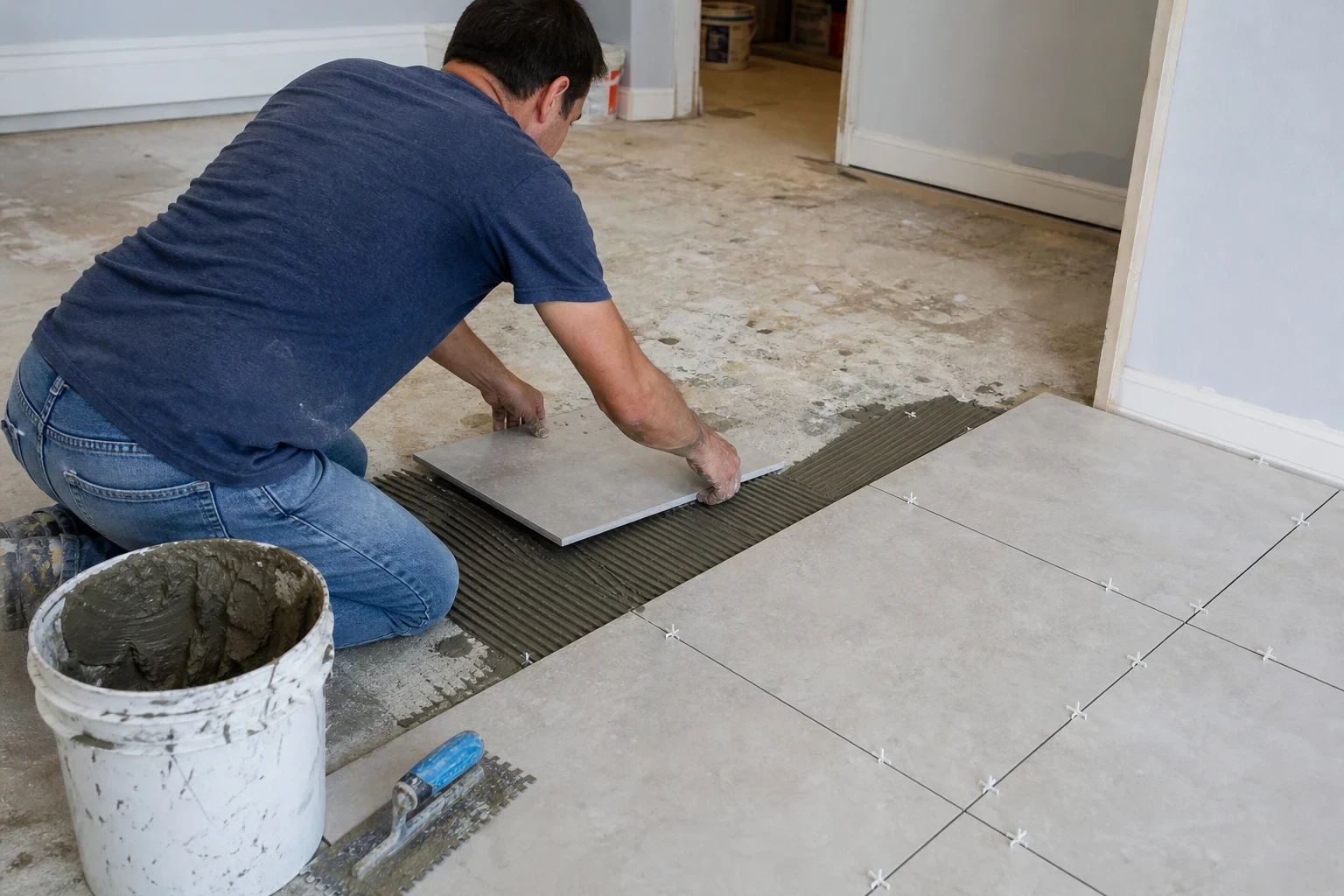
A cracked or hollow tile does not always mean a new floor. We find out why it failed, swap individual tiles when the thinset around them is sound, and install new ceramic or porcelain tile when the floor underneath needs a fresh start.
Find the Cause Before Choosing a Fix
Tile fails for a reason. A single crack from a dropped skillet is a repair. A crack that runs across five tiles in a straight line usually follows a crack in the slab below, and a new tile set over it will crack again unless we bridge that movement with an uncoupling membrane.
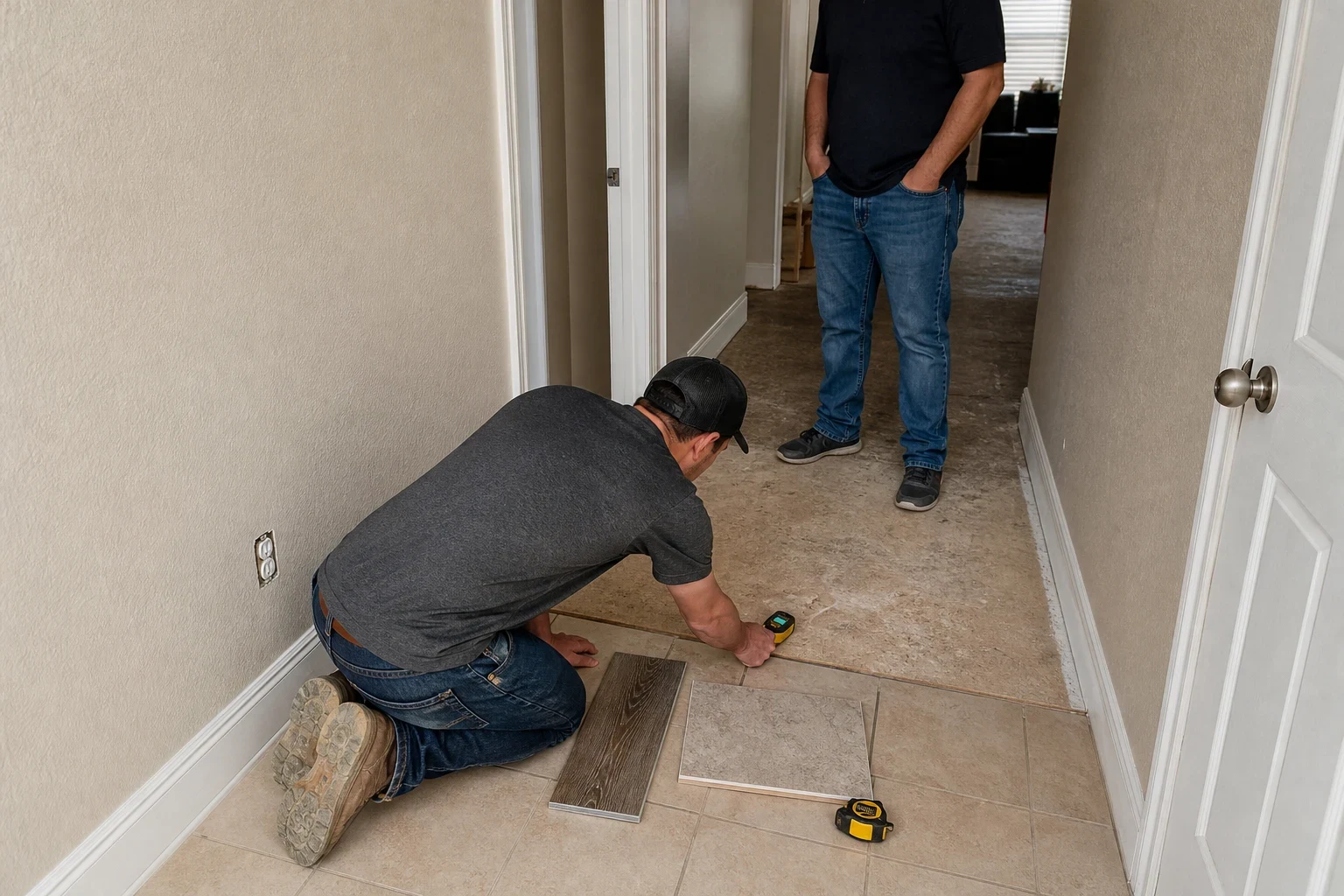
Before we recommend anything, we tap the floor to map hollow spots, check grout lines for gaps, and look at whether the tiles still hold firm to the thinset. If most of the floor is holding tight and you have spare tiles or we can match the color, swapping a few tiles is the sensible call. If loose tile is widespread or the original installer skipped movement joints, we explain why patching would only buy time.
Most homes around League City sit on slab foundations over clay soil that shrinks and swells with rain and drought. That is why we pay close attention to crack patterns and perimeter gaps on every tile job.
What Our Tile Work Covers
Single-tile replacement
We cut out the damaged tile and grind away the old thinset without disturbing its neighbors. The new tile is back-buttered for full mortar contact and grouted to match the joint width around it.
Hollow tile diagnosis
A dull, hollow sound under your heel means the tile has lost its grip on the thinset. We map every hollow area so you can see whether it is a few isolated tiles or a pattern spreading across the room.
Regrouting cracked joints
Crumbling or missing grout lets water and grit work under the tile edges. We rake out failed grout and pack in fresh grout, using sanded, unsanded or epoxy depending on joint width and where the floor is.
Full tile installation
New floors start with removal of the old covering, flattening the slab, and a crack isolation or uncoupling membrane where it is needed. We set ceramic, porcelain and large-format tile with the right trowel notch for proper coverage.
Movement joints at the perimeter
Tile needs room to expand at walls, thresholds and long runs. We leave the gap under the baseboard and add soft joints in large rooms, which prevents the tenting that pops tiles up off the floor.
Signs Your Tile Floor Needs Attention
- Hairline cracks in a straight line
- Cracks that line up across several tiles almost always mirror a crack in the slab. These need a membrane fix, not just new tiles.
- Hollow sound when you walk
- Loose tile has lost its grip on the thinset. Left alone, the edges chip and the tile eventually cracks under load.
- Tiles lifting or tenting
- When tiles push up into a ridge, the floor ran out of room to expand. Missing perimeter gaps are the usual cause.
- Grout washing out
- Grout that sands away or cracks along the joints lets moisture reach the setting bed. Catching it early often keeps this a regrouting job.
- Chipped edges and lippage
- Uneven tile edges catch feet and chip easily. It often points to a substrate that was not flat enough for the tile size.
How a Tile Job Runs
- 1
Inspection and tap test
We walk the floor, tap every suspect area, and note crack patterns, grout condition and transitions to other rooms. You see what we find before we suggest anything.
- 2
Repair or replace, explained
We tell you which option fits and why, and what the trade-offs are. If fixing the existing floor makes sense, we look at matching tile from your leftovers or current stock.
- 3
Prep and protection
We cover nearby floors and cabinet bases, and contain dust when cutting out old tile. For new installs, we flatten the slab and lay membrane where the substrate calls for it.
- 4
Setting, grouting and curing
Tile goes down with checked mortar coverage, then grout after the thinset sets. We tell you when the floor can take light foot traffic and when furniture can go back.
What Moves the Cost of Tile Work
Resetting a few tiles and laying a whole new floor are very different jobs, and we price each from what we actually see on your floor. The biggest swings come from what is under the tile and how much of it needs work.
- Repair versus full replacement
- Swapping a handful of tiles is far less labor than tearing out a room. That is one reason we check carefully before recommending replacement.
- Slab condition
- Cracks, dips and high spots need grinding, patching or self-leveler before new tile goes down. Large-format tile needs a flatter surface than small tile.
- Tile type and size
- Porcelain is harder to cut than ceramic, and natural stone needs extra care. Patterns like herringbone add cuts and time.
- Removal of old flooring
- Taking up tile set in a thick mortar bed is heavier work than pulling up vinyl or carpet.
- Membrane and trim details
- Uncoupling membrane, transition strips and tiled baseboards add material and labor but often decide how long the floor lasts.
Tile Flooring Questions
- Can you replace one cracked tile without redoing the floor?
- Usually, yes. We cut out the damaged tile and set a new one in fresh thinset. The main limit is matching, so leftover tiles from the original job help a lot.
- Why do my tiles keep cracking in the same spot?
- Repeat cracks usually follow movement in the slab underneath. A new tile alone will not stop it. A crack isolation membrane under the new tile lets the slab move without transferring the crack to the surface.
- Is a hollow-sounding tile a problem?
- A few hollow tiles in a large floor may never cause trouble. A growing area of hollow tile means the adhesion is failing, and those tiles tend to crack or loosen over time. We map the hollow spots so you can see how far it goes.
- Can new tile go over my existing tile?
- Sometimes, if the old tile is fully stuck down, flat and the added height works with doors and transitions. If any of it is loose, we remove it, because new tile is only as secure as what it sits on.
- Should I pick tile or luxury vinyl plank for a kitchen?
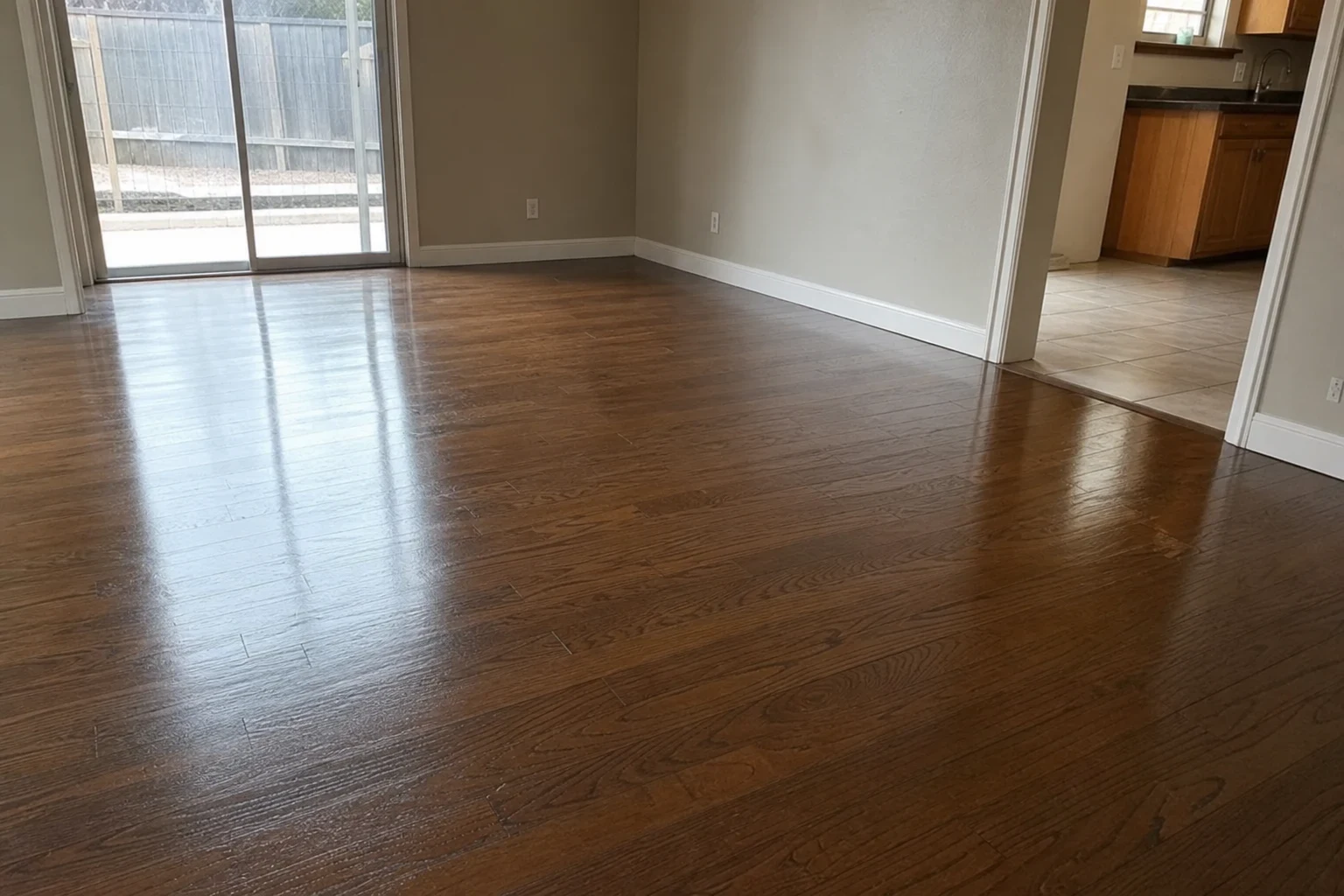
- Tile handles water and heat well and lasts a long time when set correctly, but it is hard underfoot and colder. Luxury vinyl plank is softer and quicker to install. We talk through both with you, and our Luxury Vinyl Plank page covers it in more detail.
Find Out If Your Tile Can Be Saved
Tell us what you are seeing, cracks, hollow spots or loose grout, and we will set up a time to look at the floor and give you a straight repair-or-replace answer.