League City Flooring, Fixed Where It Makes Sense
We install and repair hardwood, luxury vinyl plank, tile, laminate and carpet in homes across League City, Friendswood and Dickinson. When a few cupped boards, a cracked tile or a lifted seam is the problem, we fix that. When damage reaches the subfloor or the material is worn through, we explain why a new floor is the better spend.
- Fixes weighed ahead of tear-out
- Line-item written estimates
- Slab moisture tested first
- Cleanup when the job ends
Flooring We Install and Fix
We've been in business 25+ years, and most of that time has gone into hardwood flooring, luxury vinyl plank, luxury vinyl tile, tile flooring, laminate flooring and carpet installation. We also lay carpet tile, vinyl composition tile for utility rooms and garages converted to living space, and stair flooring with new treads, risers and nosing. Each service page explains how that material fails and what a fix or a new install involves.
Hardwood Flooring
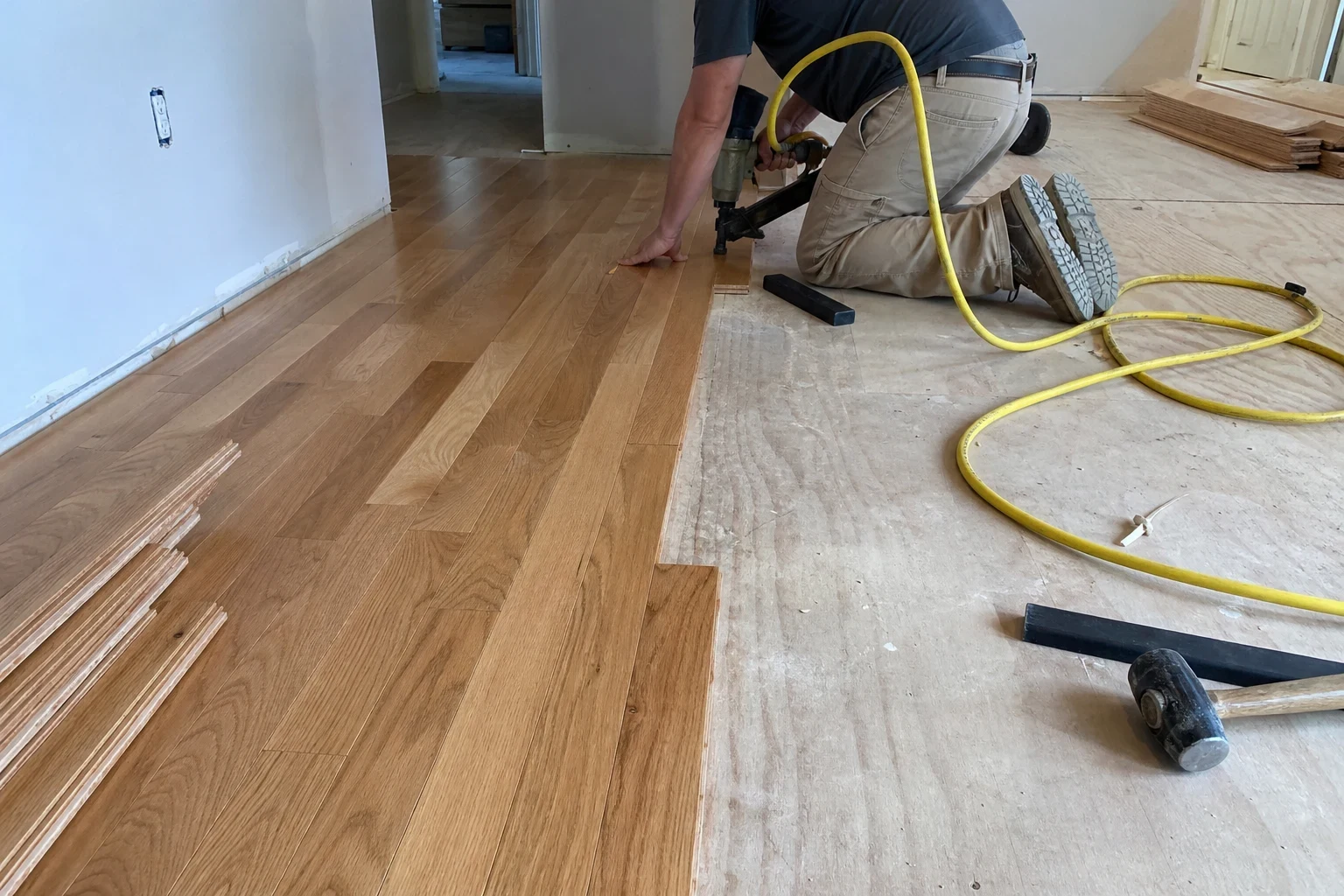
Board-level fixes for cupped, loose or stained hardwood, plus new solid and engineered floors installed over slab or plywood.
Luxury Vinyl Plank
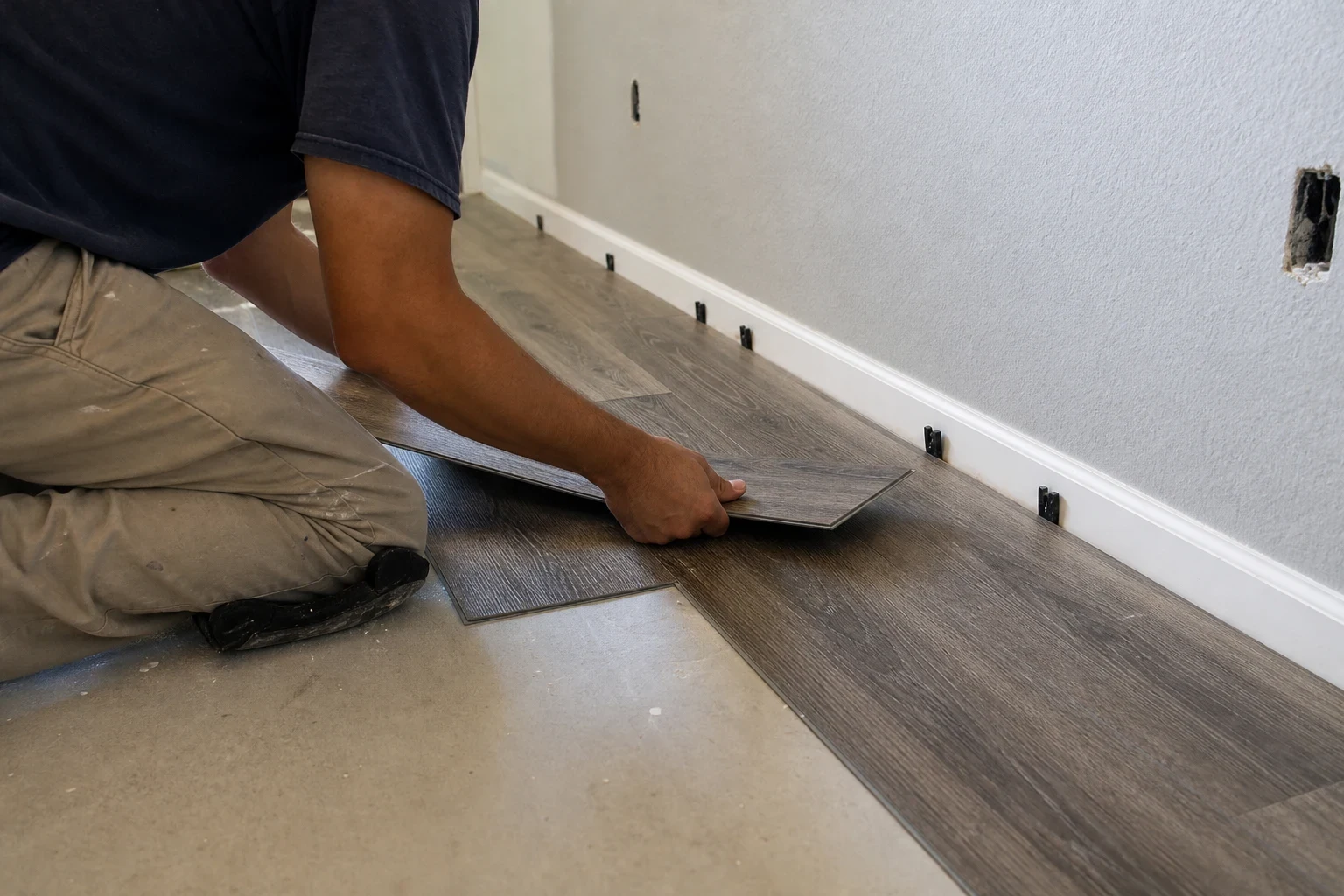
Gapped, peaked or water-damaged LVP checked for the real cause, with individual planks swapped out where possible and full installs done over a properly prepared slab.
Tile Flooring
Ceramic and porcelain tile work, with a straight answer on whether a few tiles can be swapped or the whole floor needs to come up.
Laminate Flooring
Plank swaps, buckling fixes and new laminate installs over a properly prepped subfloor, with a straight answer on fixing versus starting over.
Carpet Installation
New carpet and pad installed over a checked subfloor, power-stretched and seamed so it stays flat, or a straight answer when restretching is enough.
Carpet Tile
Carpet tile laid on releasable adhesive over a tested slab, plus single-tile swaps when only a few squares are damaged.
Luxury Vinyl Tile
Glue-down and click luxury vinyl tile, installed over a tested, flattened subfloor, with single damaged tiles swapped out when a whole new floor isn't needed.
Vinyl Composition Tile
Hard-wearing 12-inch VCT for garages, laundry rooms and workshops, with single-tile swaps when the rest of the floor is still sound.
Stair Flooring
Treads, risers and nosings in hardwood, vinyl plank, laminate or carpet, with loose or squeaky steps repaired before anything is torn out.
What Moves the Price of a Flooring Job
Square footage is only part of the number. Much of the cost hides beneath the finished surface or along its edges, so we check these items ahead of writing any estimate.
We walk the room, measure, check moisture and flatness, then give you a written estimate that lists each item. If a repair is an option, both numbers appear side by side.
- Spot fix versus a full room
- Swapping a few planks or resetting a handful of tiles costs far less than redoing a room. The deciding question is whether matching material exists and whether the damage has spread past what you can see.
- Condition of the slab or subfloor
- Most homes here sit on concrete slabs. High spots, dips and cracks need grinding or self-leveling compound so rigid core vinyl and tile lie flat, and that prep is billed separately.
- Moisture control
- Slabs push moisture vapor upward. Wood and some laminates need a vapor barrier or a moisture-rated adhesive, which adds material cost but keeps the new floor from cupping.
- Removal of the old floor
- Carpet pulls up quickly. Glued-down tile or old sheet vinyl takes much longer to scrape, and we test older adhesives before disturbing them.
- Material and layout
- Wide hardwood, large-format porcelain and herringbone patterns take more labor and produce more waste than standard plank layouts.
- Stairs, transitions and trim
- Each stair tread, threshold, reducer and run of quarter round adds time. Stairs are priced per step because every one is cut to fit.
How a Flooring Job Runs
Most small fixes finish in a day. A full room or a whole floor follows the same steps, just with more time between them.
- 1
The phone call
You tell us what the floor is doing and where. Squeaks, soft spots, lifting seams and stains each point to different causes, so the details help us bring the right meters and tools.
- 2
In-home inspection
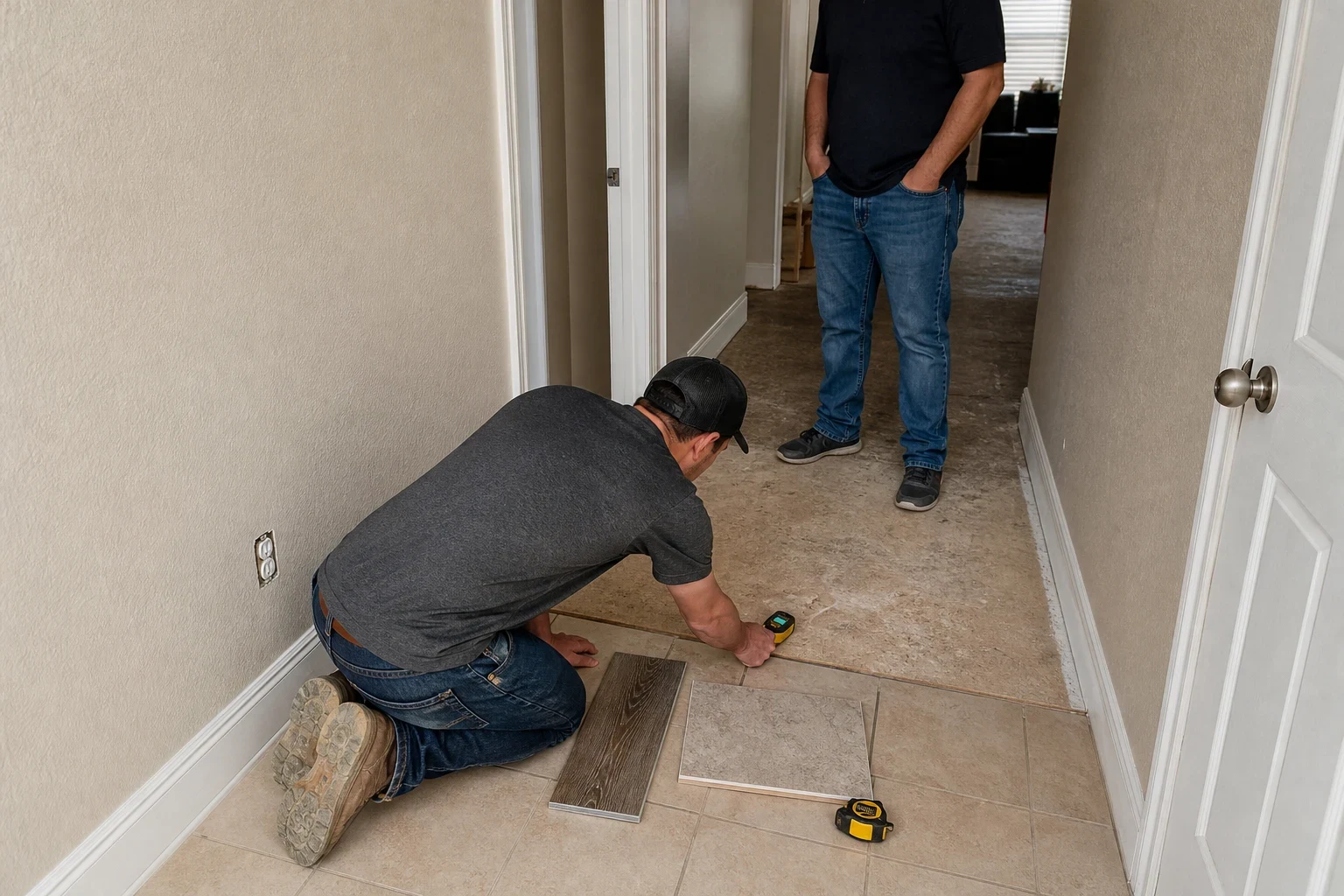
We take moisture readings, check flatness with a straightedge, pull a transition strip or a vent cover to see the layers, and photograph what we find.
- 3
Your options in writing
You get the fix, the new-floor option or both, each with its own line items and a plain note on how long we expect it to last.
- 4
Prep and installation
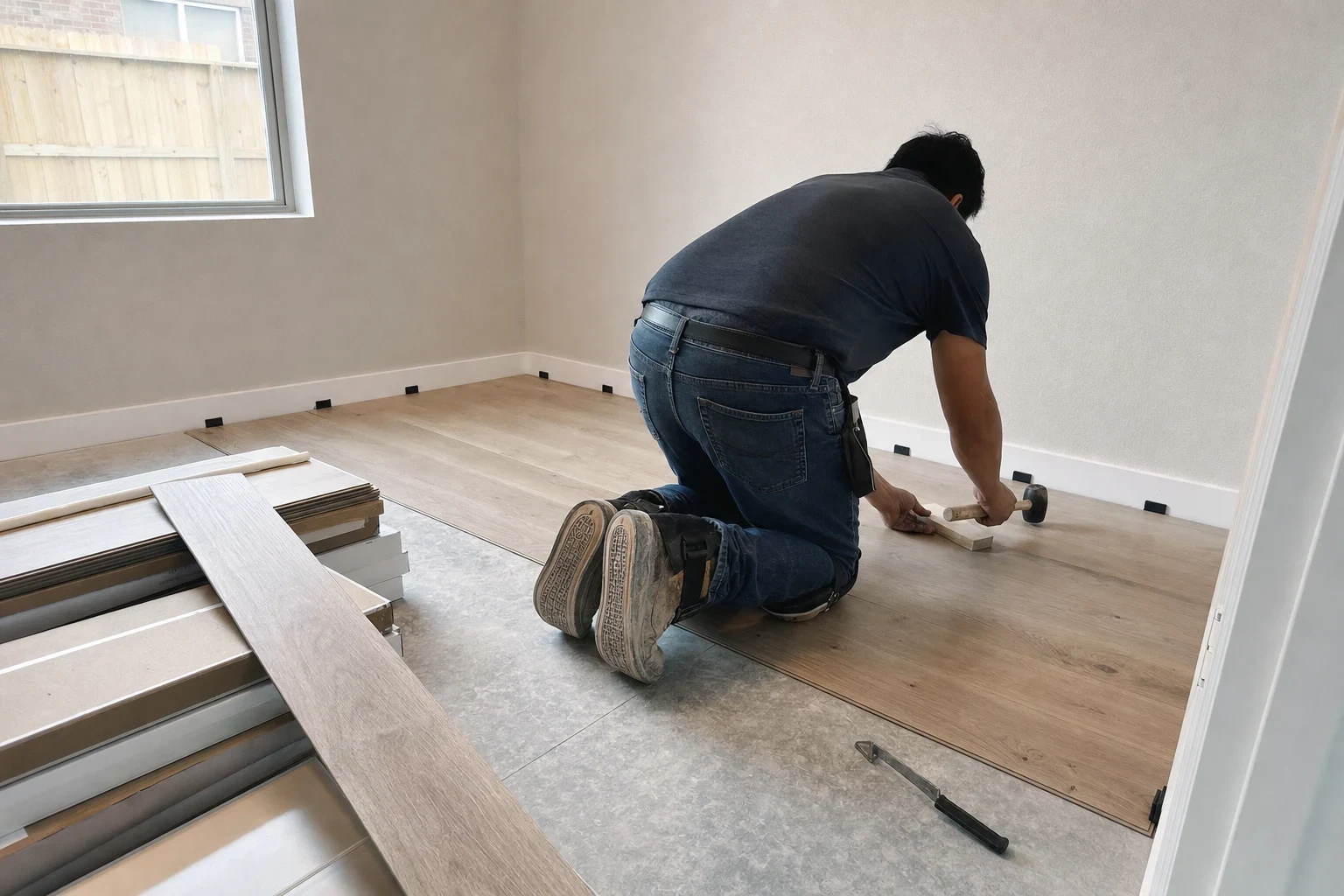
We protect doorways and nearby flooring, remove the old material, level and dry the substrate, then install to the manufacturer's expansion gap and acclimation requirements.
- 5
Cleanup and walkthrough
We haul off debris, vacuum the room and walk the finished floor with you, pointing out transitions and any care steps for the first few days.
About Flooring League City
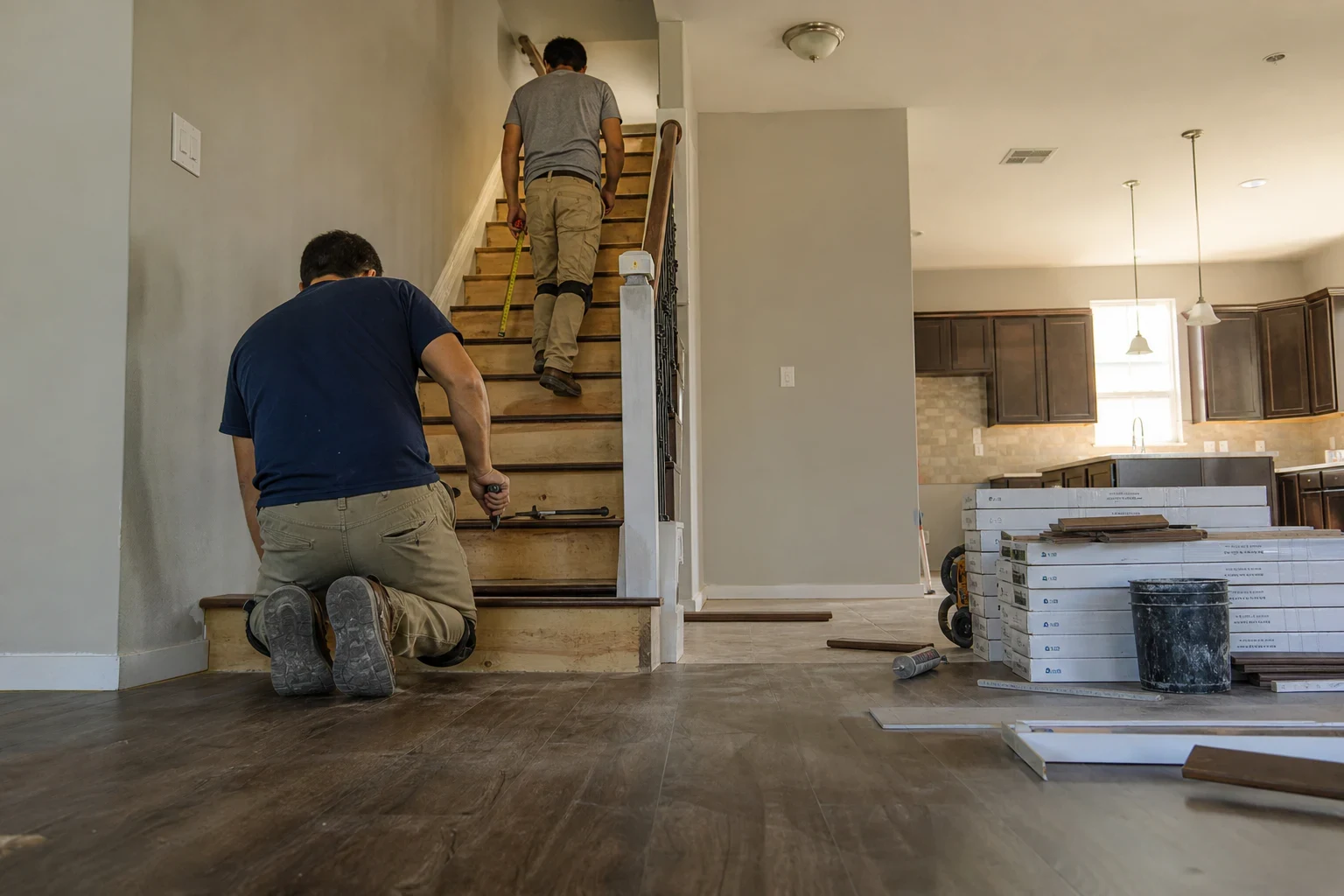
We are a flooring company that works inside your home, room by room. We install new floors every week, but we also spend a good share of our time on the smaller jobs other installers turn down: a water-stained plank by the dishwasher, a run of laminate that swelled near a patio door, a cracked tile in the entry hall.
Taking those jobs seriously is how we work. Tearing out a floor that only needed a few boards swapped wastes your money and sends good material to a landfill. Patching over a moisture problem wastes it twice. Our job is to tell you which situation you are in and back it up with readings and photos, so the decision is yours and it rests on evidence.
- In business
- In business 25+ years
Where We Work
We serve homeowners throughout League City and the surrounding Bay Area. That includes Friendswood, Dickinson, Webster, Nassau Bay, Kemah, Alvin, Santa Fe, Bacliff, Taylor Lake Village and El Lago.
- League City
- Friendswood
- Dickinson
- Webster
- Nassau Bay
- Kemah
- Alvin
- Santa Fe
- Bacliff
- Taylor Lake Village
- El Lago
If you are close by but not on this list, ask when you call. The Service Areas page lists the towns we cover regularly.
How We Decide Between a Fix and a New Floor
A floor usually fails in one spot for one reason. We find that reason first, because it tells us whether a patch will last or whether the same problem will come back under new boards.
- 01
We diagnose the cause, not the symptom
Cupped hardwood is a moisture problem, not a board problem. A popping tile usually means hollow thinset or a cracked slab underneath. We name the cause ahead of suggesting any fix, so you are not paying to cover up something that keeps working against the new material.
- 02
Spot repairs when the floor can take them
Click-lock vinyl and laminate planks can often be unlocked from the nearest wall and swapped out. Damaged hardwood boards can be cut out and woven in. Cracked tiles can be ground out and reset. If you have spare boxes in the garage, the work is usually straightforward.
- 03
A plain reason when a new floor wins
Sometimes patching is the wrong money. Discontinued colors, laminate swollen at the seams across a whole room, or a subfloor that has stayed wet all point to starting over. We tell you which applies and show you what we found.
- 04
25+ years of seeing how floors age
We've been in business 25+ years. That time on the job is how we know which fixes hold up through a humid Gulf Coast summer and which ones open back up by fall.
- 05
Estimates broken out line by line
Tear-out, leveling, underlayment, transitions, trim and haul-away each get their own line. You can see what a targeted repair costs next to what a full new floor costs.
Flooring Questions We Hear Most
- Can my floor be repaired, or does it need to be replaced?
- It depends on the cause and how far it has spread. Isolated damage on a floor with a dry, flat subfloor can usually be fixed, especially if spare material exists. Widespread swelling, a persistent moisture source or a discontinued product that cannot be matched tends to make a new floor the better choice. We check and explain which applies to your floor.
- What if my flooring is discontinued and I have no spare boxes?
- We can sometimes borrow planks from a closet or under a built-in and fill those spots with a close match where nobody will see it. If that is not possible, we look for the nearest available color and tell you honestly whether the difference will show. When it would be obvious in an open room, we say so up front.
- Can vinyl plank or laminate go directly over my concrete slab?
- Often, yes, but only after we test the slab for moisture and check it for flatness. Rigid core vinyl handles moisture well but will rock and click at the joints over a dip. Laminate needs a vapor barrier underlayment on concrete. We level and seal the slab first when the readings call for it.
- Why do my vinyl planks click or shift when I walk on them?
- That is usually a flatness problem, not a bad plank. Floating floors need the slab or subfloor flat within the tolerance the manufacturer sets, and a low spot lets the locking joints flex with every step. Over time those joints can chip or separate. We find the dip, lift the affected rows, level the area and relay the same planks when they are undamaged.
- My floor got wet from a leak. Will insurance cover it?
- That decision belongs to your insurer and your adjuster, not to us. What we can do is document the damage with moisture readings and photos, explain what has to be removed and why, and give you a line-item estimate you can share with your claim. The leak itself should be fixed and the area dried prior to any new flooring going down.
- How long does a typical job take?
- A plank or tile fix usually takes a few hours. A single room of vinyl or laminate is often one to two days, depending on prep. Tile and hardwood take longer because of setting time and acclimation. We give you a schedule in the written estimate.
- Do I need to move furniture ahead of the work?
- Clear out small items, electronics and anything fragile. Ask about larger pieces when you call so we can plan the day around them. We also recommend emptying floor-level cabinets near the work area.
Find Out What Your Floor Actually Needs
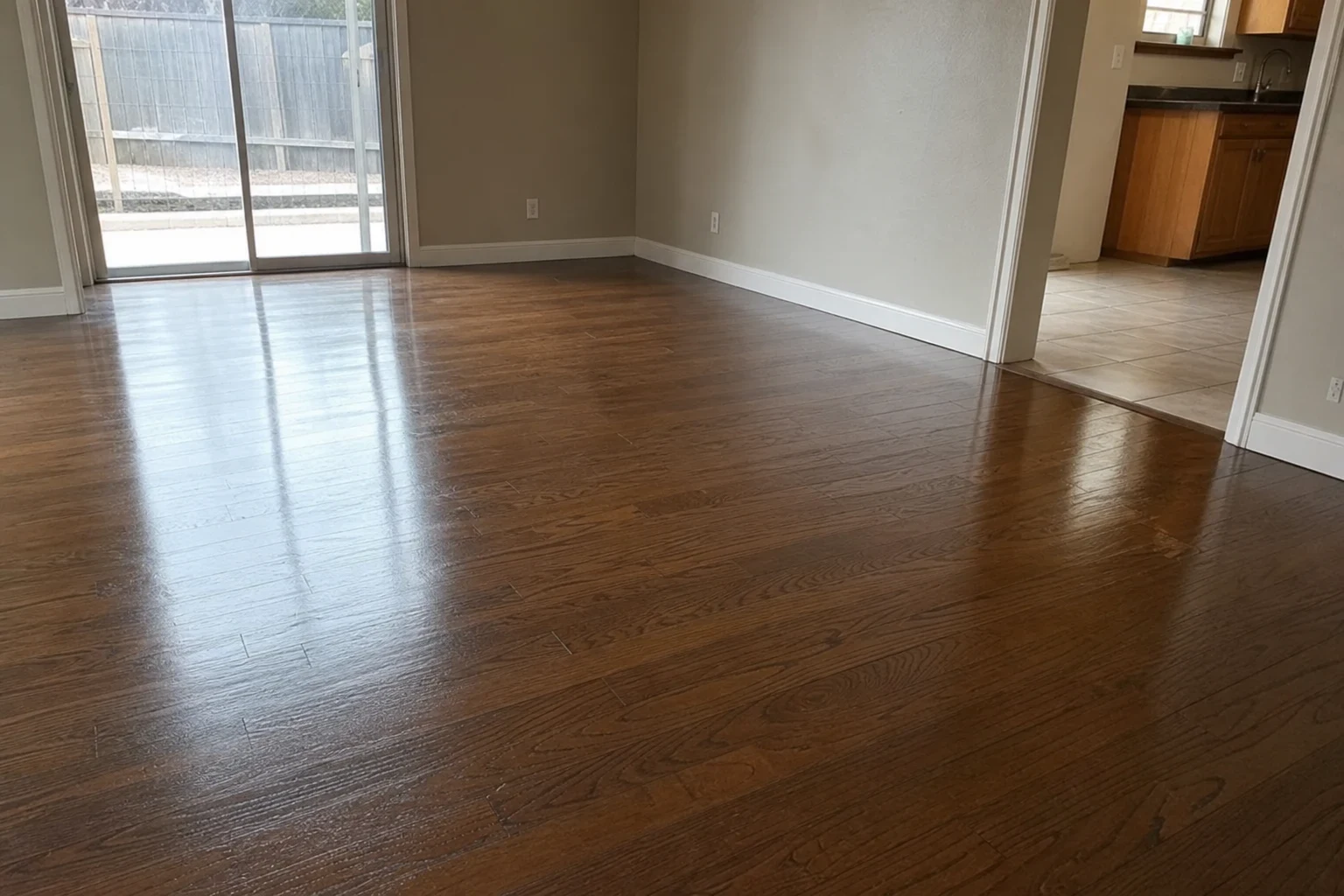
Tell us what you are seeing and where. We will set up an inspection and give you a straight answer on fixing it or starting fresh, with the numbers in writing.