ServicesLuxury Vinyl Plank
Luxury Vinyl Plank Repair and Installation in League City
A few bad planks rarely mean a whole new floor. We find out why your luxury vinyl plank gapped, peaked or lifted, swap out the damaged boards when that solves it, and install new LVP over a flat, dry subfloor when a new floor is the honest answer.
What Luxury Vinyl Plank Does Well, and Where It Fails
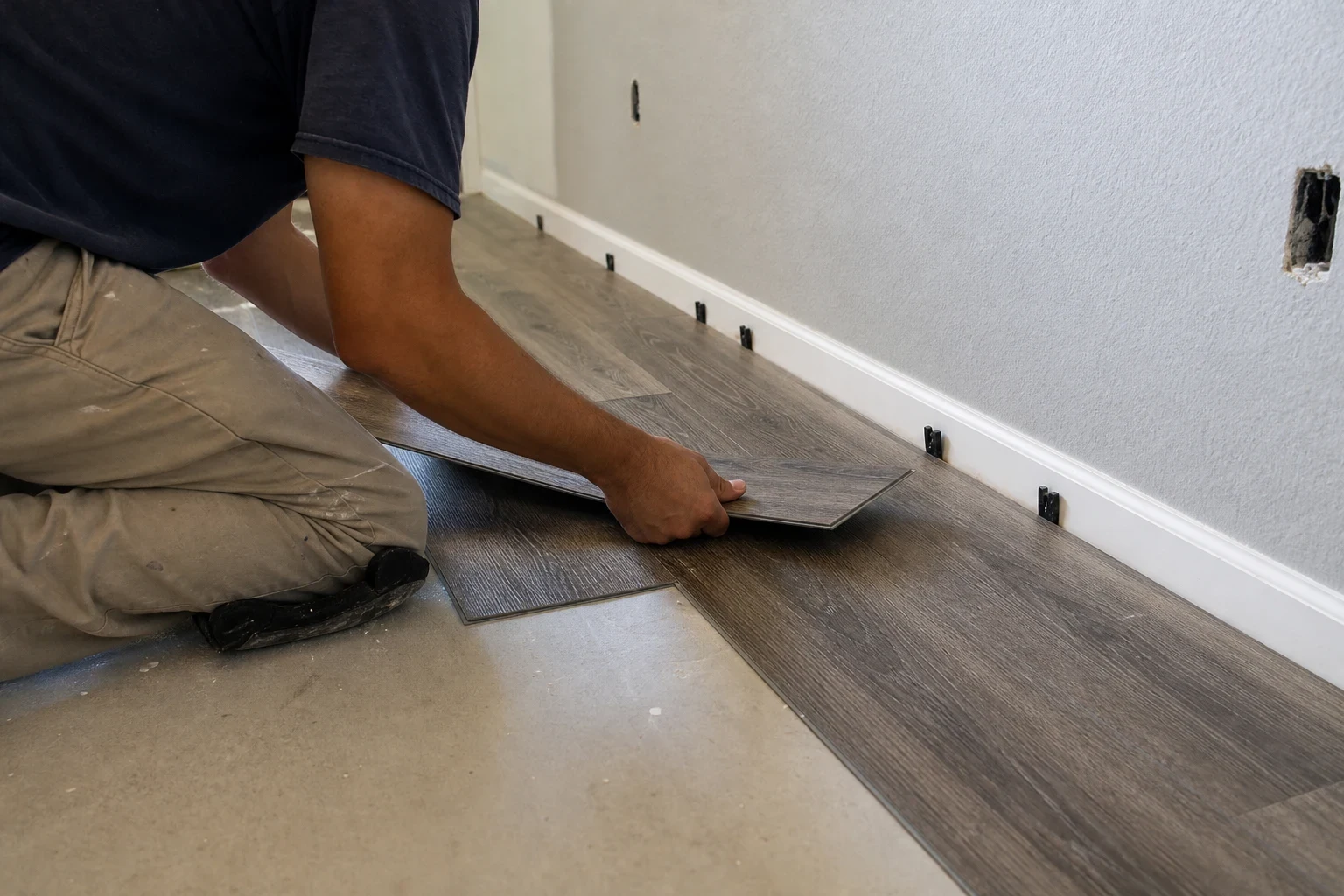
Most luxury vinyl plank is a floating floor. The planks lock together at a tongue-and-groove edge and sit on the subfloor without fasteners, so the whole floor moves as one sheet as temperatures change. That design is why LVP goes down quickly, and it is also why most failures trace back to something other than the plank itself: a slab that is not flat, a missing expansion gap at the walls, or heavy furniture pinning a floor that needs to move.
Our first job is to name the cause. If three planks near the kitchen sink took on water or a dropped pan cracked a board, we change out those planks and leave the rest alone. If the locking joints are failing across a whole room because the subfloor has a dip, swapping boards only buys a few months, and we will tell you that before you spend anything.
What Our LVP Work Covers
- Single-plank swaps
- We cut out a damaged plank, trim the locking edge on the new one and glue it in place, so we do not have to unclick half the room to reach it. A leftover box from your original install gives the best color match.
- Seam and gap correction
- Gaps at the short ends usually mean the floor is shrinking or was pinned. We free the perimeter, close the joints and fix what was holding the floor in place.
- Subfloor flattening
- Floating LVP needs a flat base, and most manufacturers allow no more than about 3/16 inch of variation across a 10-foot span. Ridges get ground down and dips get filled with patching compound before any new plank is laid.
- Moisture testing and underlayment
- Concrete slabs here hold ground moisture, especially through humid summers. We test before installing and use a vapor barrier or an attached-pad product suited to the reading.
- Trim, transitions and doorways
- We pull and reset baseboards or quarter round, undercut door jambs so planks slide beneath them, and fit transitions to tile, carpet or hardwood flooring.
Signs Your Vinyl Plank Floor Needs Attention
Peaking at the joints
Two planks pushing up into a tent shape means the floor has nowhere to expand. The usual culprit is trim, cabinets or a kitchen island pressing down on the floating floor.
Gaps opening at the ends
Short-end gaps that widen in cooler months point to a floor that was installed without enough room to move, or locking edges that were damaged during install.
Soft or hollow spots underfoot
A plank that flexes or clicks when you step on it is bridging a low spot in the subfloor. Left alone, the locking joint above it will eventually snap.
Swelling or lifting after a leak
The vinyl surface resists water, but water that gets under the planks can sit on the slab and grow mold. Planks near dishwashers, toilets and patio doors deserve a close look.
Wear through the top layer
When the clear wear layer is scratched through to the printed film, no fix brings it back. That plank has to come out.
What Moves the Price of LVP Work
A plank repair and a full install are priced very differently, so the first question is which one your floor actually needs. From there, the price follows the room, the product and what sits under the planks. We list each item separately so you can see where the money goes.
Repair versus full install
Swapping a handful of planks is mostly labor and matching material. A new floor adds removal, prep and product across every square foot.
Subfloor condition
A flat, dry slab needs little work. Dips, cracks or high moisture add leveling compound, grinding or a vapor barrier.
Product choice
Thicker wear layers and rigid SPC cores cost more than thin WPC planks but hold up better to pets and rolling chairs.
Layout and old flooring
Many rooms, angled walls and doorways add cuts. Tearing out glued tile or carpet with tack strip adds removal time.
Stairs and trim
Treads and risers are priced separately; our Stair Flooring page covers that work.
How an LVP Job Runs
- 1
Find the cause
We look at the damaged area, check the perimeter for expansion space and run a straightedge across the subfloor. On a slab we take a moisture reading too.
- 2
Repair or replace, in writing
You get a written, line-item estimate that says whether a plank repair will hold or whether the floor needs to come up, and why.
- 3
Prepare the room
We move furniture, remove old flooring and trim, then flatten and clean the subfloor. Planks acclimate in the room if the manufacturer calls for it.
- 4
Install and finish
Planks go down with staggered joints and a gap at every wall, under every jamb and around every fixed object. Trim and transitions go back on, and we vacuum and walk the floor with you before we leave.
Luxury Vinyl Plank Questions
Can you replace just a few damaged planks?
Usually, yes. We cut out the damaged boards and glue in new ones without disturbing the rest of the room. The best match comes from leftover planks from your original install, because dye lots vary between production runs. If you have none, we will help you find the closest match and show it to you before we cut anything.
Isn't LVP waterproof?
The plank itself is water resistant, but the seams and the space underneath are not sealed. Water from a leak or flooding can travel under a floating floor and stay trapped against the slab. In that case the planks often need to come up so the slab can dry, even if they look fine.
My floor buckled near the back sliding door. Why?
Direct afternoon sun through glass can heat vinyl planks well past room temperature, and they expand. If the floor has no room to move at the walls, it peaks. We check the expansion gap and may recommend a product rated for higher heat or window coverings.
Can luxury vinyl plank go over my existing tile?
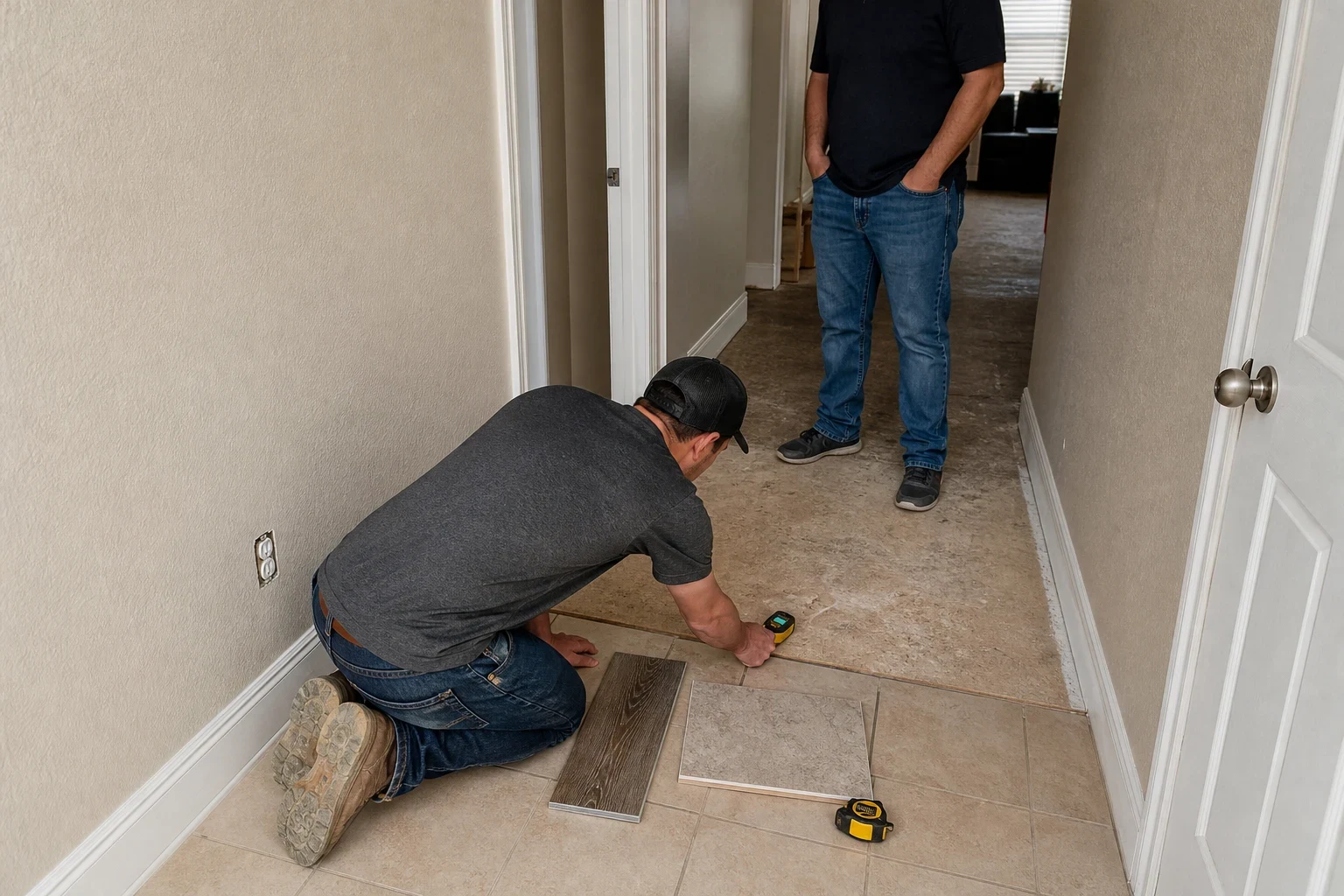
Often it can, if every tile is stuck down tight. We skim the grout joints level with patching compound so those recessed lines cannot telegraph up through the vinyl. Raising the floor height affects door clearance and transitions, so we measure those first. Loose or cracked tile has to come out.
How long will my rooms be out of use?
Swapping a few planks usually takes part of a day. A full install depends on square footage and how much prep the subfloor needs, and we give you that timeline in the estimate. You can walk on new floating LVP as soon as it is down.
Find Out Whether Your Floor Needs a Repair or a Replacement
Tell us what you are seeing and where. We will look at the cause first and give you a straight answer on fixing what you have versus new LVP.