ServicesCarpet Tile
Carpet Tile Installation and Repair in League City
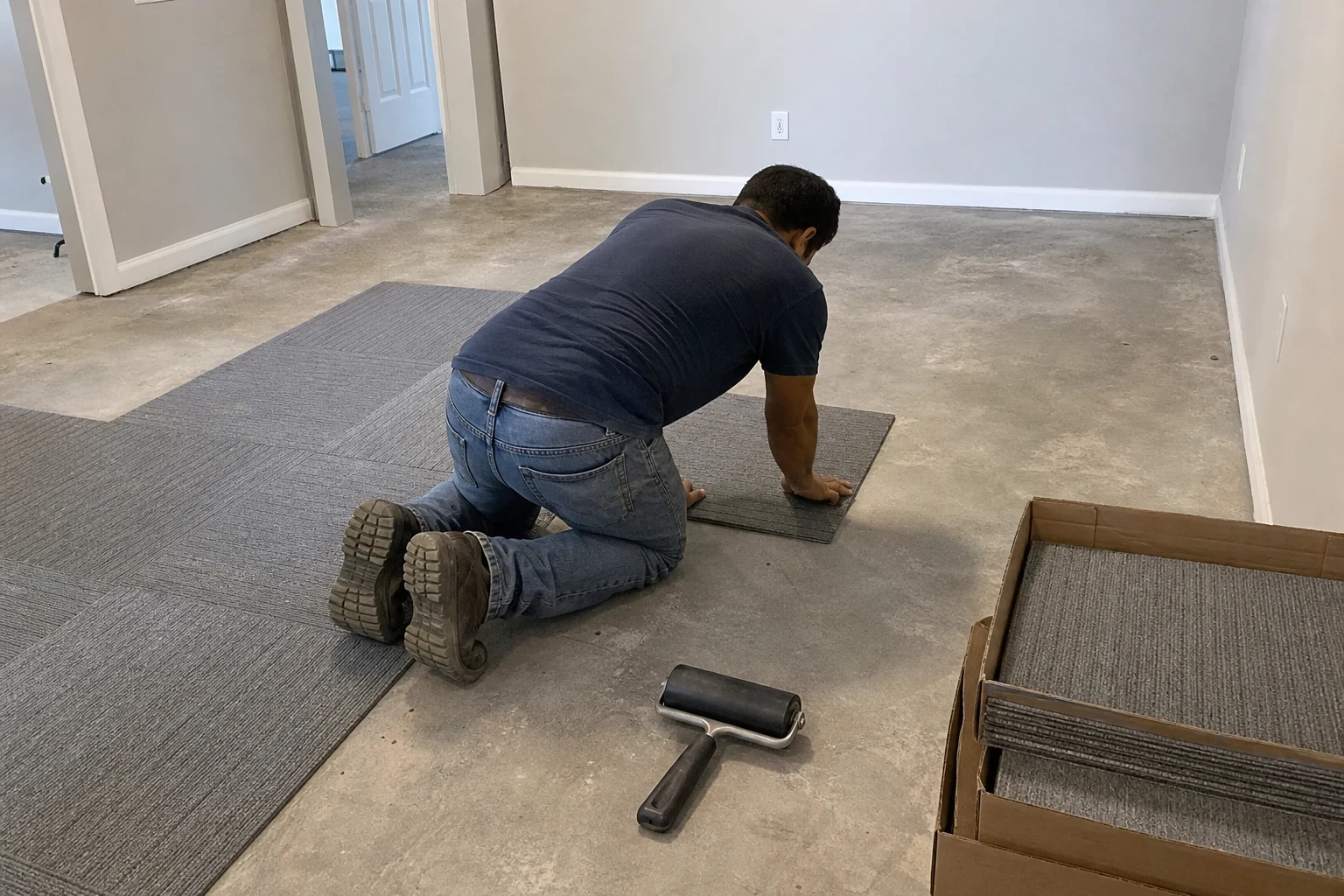
Carpet tile is carpet made in squares or planks with a stiff backing, set on adhesive that lets any single piece come up later. We install it in game rooms, offices and playrooms, and we swap out damaged tiles one at a time when the rest of the floor is still sound.
What carpet tile is and when it fits
Each carpet tile has a dense backing, usually PVC, polyurethane cushion or felt, that keeps it flat without stretching or tack strip. The tiles sit on a pressure-sensitive adhesive rather than a permanent glue, so a stained or worn square can be lifted and a matching one pressed into its place. That is why we look at repair first on carpet tile. Often the fix is six tiles, not six hundred.
It suits rooms that take spills and traffic: a game room over the garage, a home office with a rolling chair, a kids' playroom, a converted garage. It is a weaker choice for a bedroom or formal living room where you want deep pile underfoot. There, wall-to-wall carpet installation is the better call, and we will tell you so.
Nearly every house in the League City area is built slab-on-grade, and in Gulf Coast humidity water vapor keeps working its way up through the concrete. Carpet tile backing does not breathe the way older jute backings did, so we test the slab ahead of any tile going down.
What our carpet tile work includes
Slab moisture and condition check
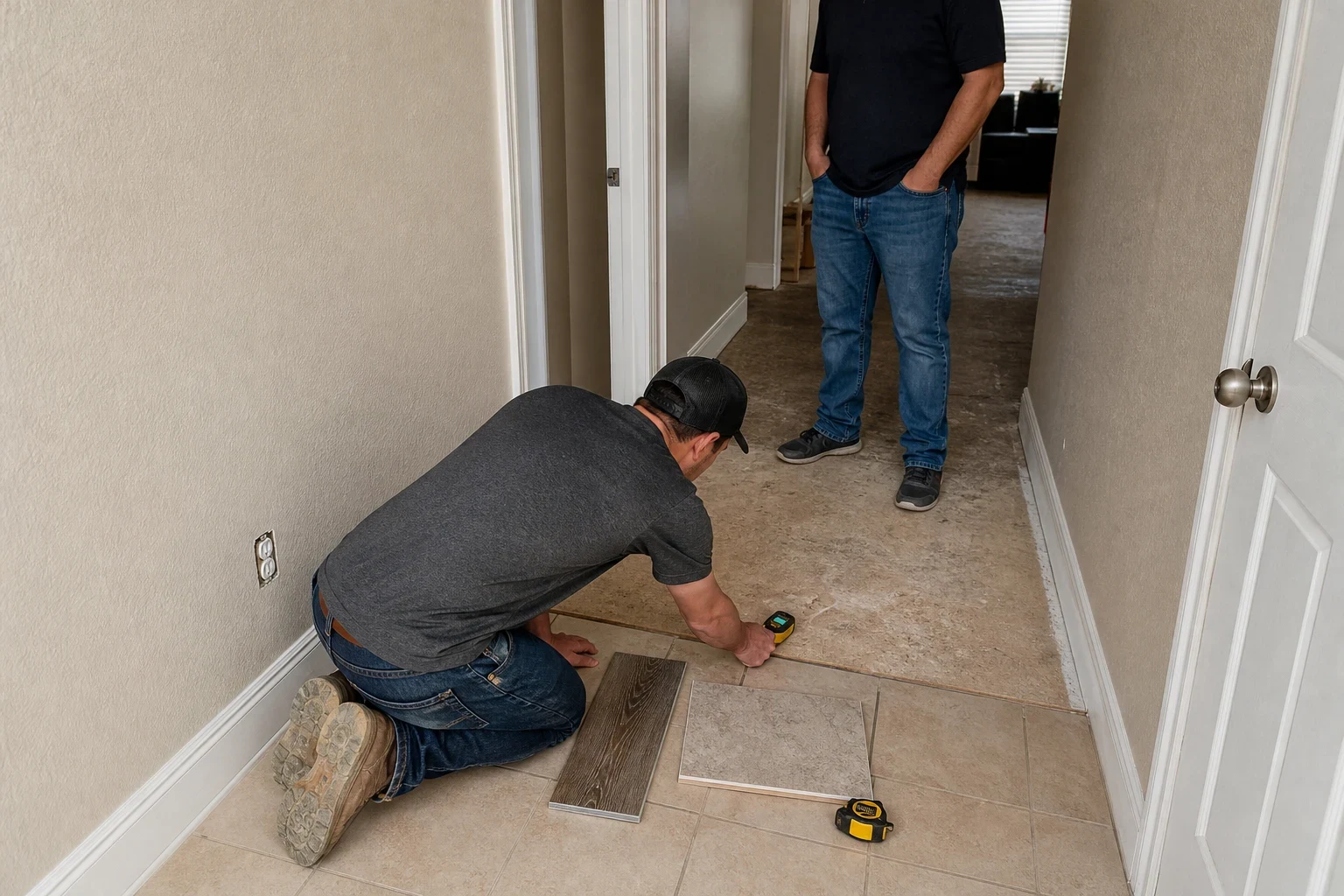
We test the concrete with a moisture meter and look for cracks, high spots and old adhesive. Excess moisture breaks down adhesive and can leave a musty smell under PVC-backed tiles, so we find it first, not after the floor is in.
Subfloor prep
We scrape or grind old glue residue, patch cracks and float low spots with leveling compound. Carpet tile shows ridges and dips more than broadloom over pad, so a flat surface matters.
Layout and pattern
We snap a center line so the cut tiles at opposite walls come out even. You choose monolithic, quarter-turn, ashlar or brick, and we follow the arrows on the tile backs so pile direction stays consistent.
Releasable adhesive installation
We roll on the adhesive the tile maker specifies and let it tack up before setting tiles. Tiles stay put under foot traffic but can be lifted later without tearing the backing.
Swapping out single tiles
On an existing carpet tile floor, we lift damaged pieces, clean the adhesive bed and set new ones. If your tile is discontinued, we can move tiles out from under a sofa or a closet into the visible spots and put the closest new match where no one will see it.
Spare tiles left with you
We leave uncut tiles from the same dye lot. The next stain becomes a quick swap you can do yourself.
Signs your carpet tile needs attention
- A few tiles stained or burned
- Pet accidents, paint, a dropped curling iron. If the damage sits in a handful of squares, swapping those squares is the fix.
- Edges curling or tiles shifting
- Usually the adhesive has let go, often from slab moisture or from tiles set before the adhesive tacked. We check the slab first so the problem does not come back.
- Musty smell or dark backing
- This points to moisture trapped under a vapor-tight backing. It calls for lifting tiles, testing the slab and sometimes a moisture-control primer under the tiles when they go back down.
- Worn traffic paths
- Rolling chairs and hallways crush pile. Rotating tiles from low-traffic corners into the path can add years before anything new is needed.
- Fading or wear everywhere
- Sun through a bright window fades tiles unevenly. When matching tiles are gone and wear covers the whole room, a new floor makes more sense than patching, and we say that plainly.
How a carpet tile job runs
- 1
Look, measure and test
We come to your home, measure the rooms, test the slab and look closely at any existing floor. You hear our repair-or-replace recommendation and the reason behind it.
- 2
Line-item estimate
Tiles, adhesive, prep, removal and furniture moving are listed separately, so you can see what each part of the job costs.
- 3
Prep
We move furniture, remove the old floor if needed, then clean and level the slab. Transition strips are measured for each doorway.
- 4
Installation
Adhesive goes down, tiles are set from the center line outward and perimeter cuts go in last. Rooms can usually be walked on the day we finish.
- 5
Cleanup and spares
We vacuum, haul away scraps and cartons, put furniture back and hand you the spare tiles.
What moves the price of carpet tile
Carpet tile pricing depends more on the room and the slab than on the tiles alone. Fixing a few squares costs a fraction of a full room, so we price both options when both are real. Each part of the job gets its own line on the estimate, so nothing is bundled out of sight.
- Room size and layout pattern
- Bigger rooms need more tile and adhesive. Ashlar and brick layouts create more cut waste than monolithic or quarter-turn.
- Backing and fiber
- Hardback PVC, cushion-backed and felt-backed tiles differ in cost and comfort. Solution-dyed nylon resists bleach and fading better than polyester and costs more.
- Slab condition
- Grinding old glue, patching cracks, leveling and moisture-control primer add labor and material. We include only what the slab test shows you need.
- Removal and furniture
- Tearing out glued-down carpet or sheet vinyl takes time, and so does moving heavy pieces like sectionals and desks.
- Matching existing tile
- If your tile is still made in the same color, the fix is simple. If not, sourcing a close match or shuffling tiles between rooms changes the scope.
Carpet tile questions we hear
- Can you replace just a few tiles instead of the whole floor?
- Yes, and that is often what we recommend. Tile set on releasable adhesive lifts out one piece at a time. We clean the adhesive bed, set the new tile with the pile running the same way and roll it in. The real limit is finding a close color match.
- Is carpet tile a good idea on a concrete slab?
- It works well when the slab is dry and flat. Vapor-tight backings trap moisture, which loosens adhesive and causes odor, so we test first. If readings are high, we may suggest a moisture-control primer or a different floor such as luxury vinyl plank or tile flooring.
- Will it look like a grid of squares?
- That depends on the product and pattern. A monolithic layout with every tile facing the same way hides seams best, while quarter-turn makes the checkerboard look intentional. Textured and patterned tiles hide seams better than flat loop.
- How does carpet tile compare to wall-to-wall carpet?
- Wall-to-wall over pad is softer and quieter. Carpet tile is firmer, handles spills better and is far easier to fix in spots. For bedrooms we usually point people to carpet installation; for game rooms and offices, tile tends to win.
- Can carpet tile go on stairs?
- We do not recommend it. Tiles cannot wrap a stair nose cleanly, and a loose edge on a step is a tripping hazard. Our stair flooring service uses materials made for treads and nosings.
A few bad tiles or a whole room to plan?
Tell us what is going on with your floor and we will set a time to look at it, test the slab and give you a straight repair-or-replace answer. We work in League City and nearby towns like Friendswood, Dickinson and Webster.