ServicesLuxury Vinyl Tile
Luxury Vinyl Tile in League City
We install glue-down and rigid-core luxury vinyl tile, and we fix it one tile at a time when the rest of the floor is still sound. Before we quote anything, we check the slab for moisture and flatness, because that is what decides how long the floor lasts.
How LVT is built and where it works best
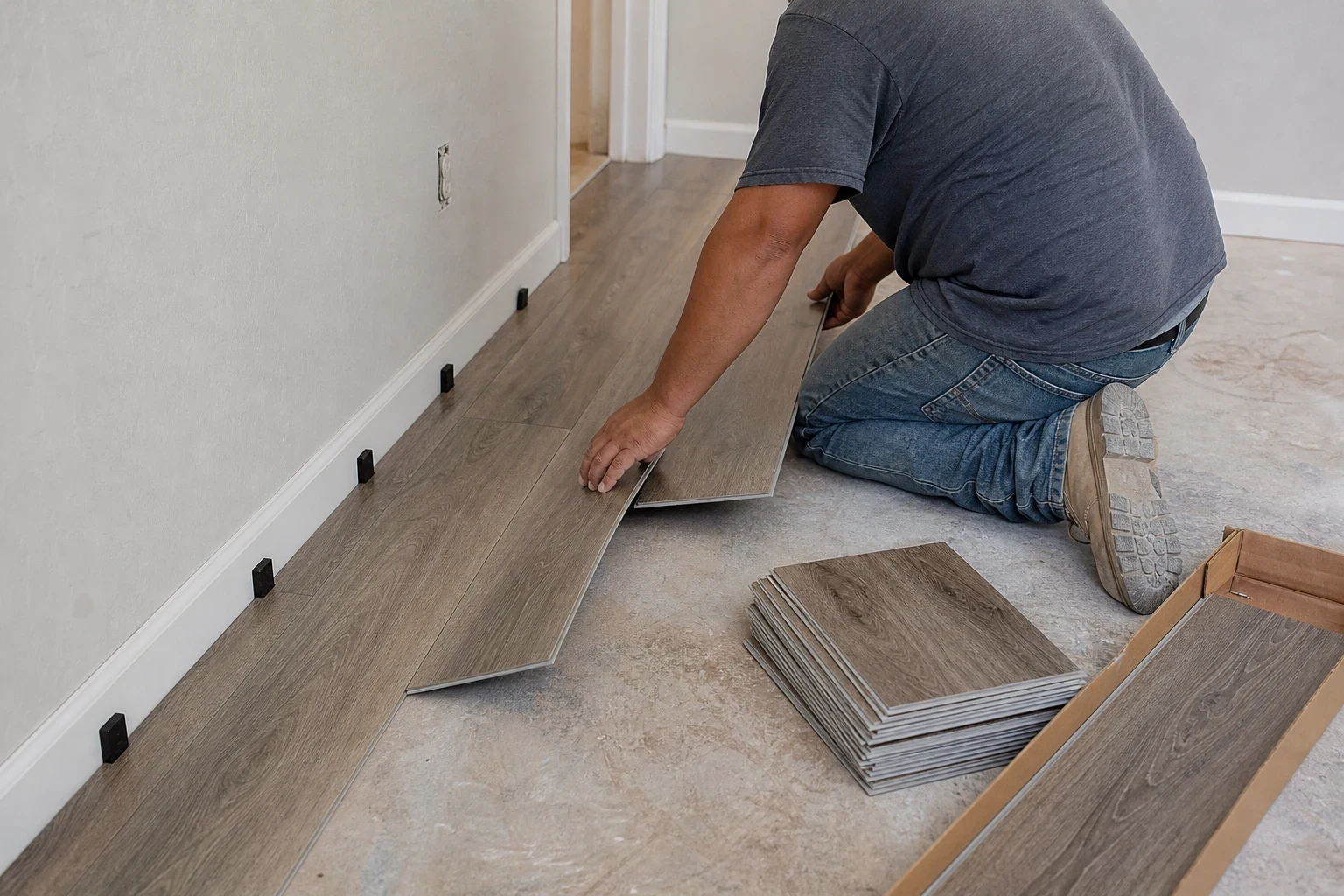
LVT comes as square or rectangular pieces made in layers and styled to look like stone or ceramic. A clear wear layer, rated in mils, takes the foot traffic. Beneath that is a printed design film, then either a flexible vinyl body meant to be glued to the slab or a rigid SPC or WPC core that clicks together and floats.
It makes sense in kitchens, baths, laundry rooms and entries where you want the look of tile without grout lines that crack or a surface that is cold and hard underfoot. Many LVT lines can also be grouted for a closer match to real tile.
Our approach is simple. If a few tiles are damaged and the floor around them is still stuck down and flat, we swap out only those tiles. If the problem is underneath, such as slab moisture breaking down the adhesive, we tell you a patch will not hold and explain what a new installation involves.
What our LVT work includes
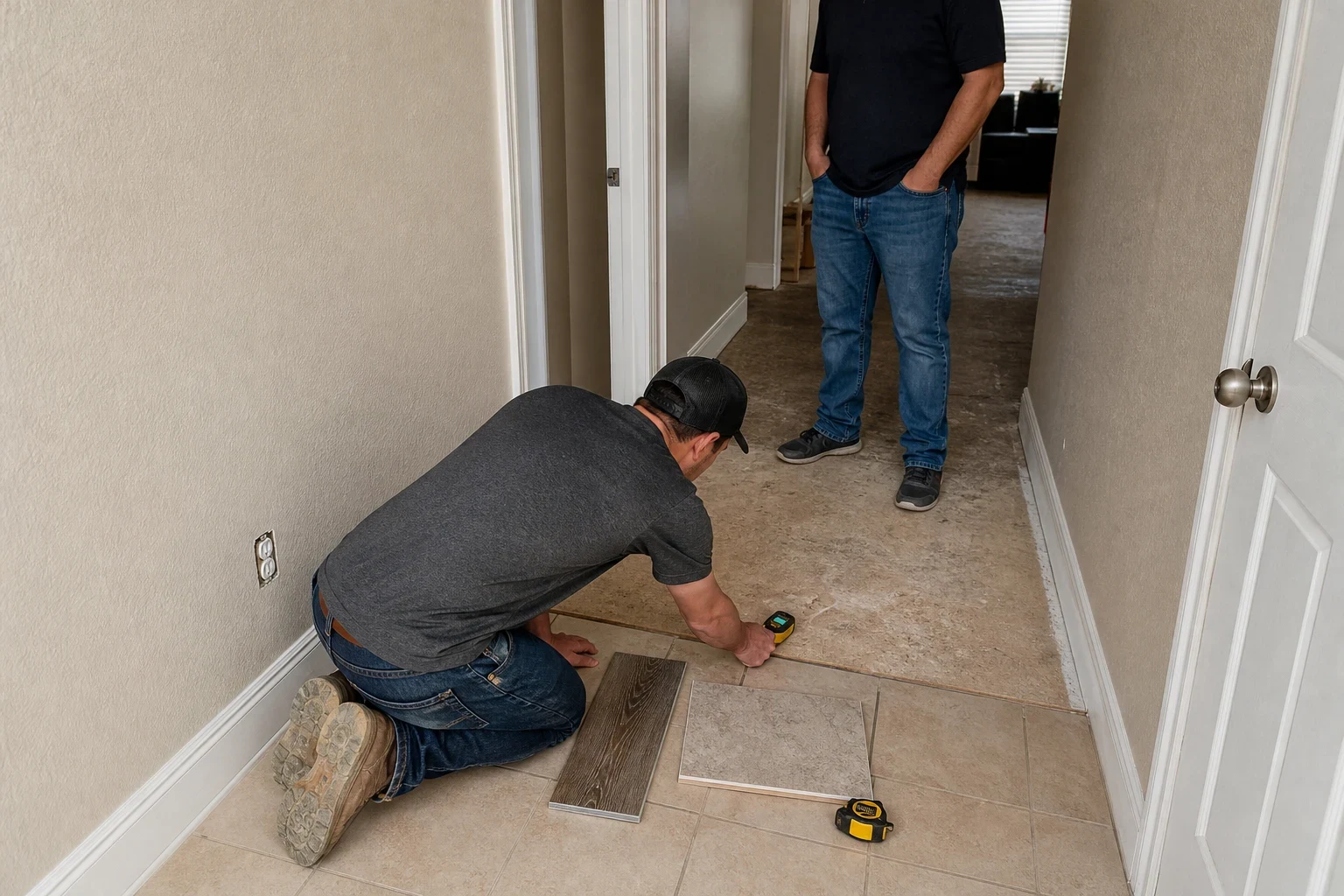
Moisture testing on the slab
Concrete keeps releasing water vapor long after it cures, and damp coastal air slows how fast it dries out. We take readings before installing, since excess moisture is the main reason glue-down tile releases and click joints swell.
Flatness check and leveling
Rigid-core LVT needs a flat base, typically within about 3/16 inch over 10 feet. Low spots get self-leveling underlayment and high spots get ground down, so the locking joints do not flex and break.
Swapping out single tiles
On glue-down floors we warm the damaged tile, lift it, scrape out the old adhesive and set a new one with fresh adhesive. On click floors we either unlock the row from the nearest wall or cut out the tile and glue in a new piece with the locking edge trimmed.
Full installation
We remove the old flooring, prep the subfloor, lay out the room so cut tiles at the walls are balanced, and install with the right expansion gaps or adhesive for the product.
Trim, transitions and cleanup
Baseboards or quarter round, transition strips at doorways and other floor types, and haul-off of old material and scraps are part of the job.
Signs your vinyl tile needs attention
- Curling corners or lifting edges
- On a glue-down floor this usually means the adhesive has let go. One or two tiles near a sink leak can be reset. Lifting spread across a room points to moisture coming up through the slab.
- Peaking at the joints
- When click tiles push up into a ridge, the floor has no room to expand. Often it was installed tight to walls or cabinets, and trimming the perimeter fixes it without new tile.
- Gaps opening between tiles
- Glue-down vinyl can shrink slightly where strong sun hits it through a patio door. Small gaps can sometimes be closed by resetting tiles, but wide ones across a room usually mean the adhesive has failed.
- Gouges, burns or cracked tiles
- Dragged appliances and dropped cast iron cut through the wear layer. This is the clearest case for a repair, especially if you still have spare tiles from the original job.
- Hollow sound or bounce
- A soft, clicking feel underfoot on floating LVT means the subfloor is not flat. Left alone, the locking edges eventually crack.
- Yellow or stained patches
- Rubber-backed mats can react with vinyl and leave permanent yellowing. Adhesive bleeding through seams leaves dark lines. Both are surface issues limited to the tiles affected.
How an LVT job runs
- 1
A phone conversation first
You tell us what the floor is doing and how big the area is. We ask whether you have leftover tiles and how old the floor is, since that shapes whether repair is realistic.
- 2
We look at the floor in your home
We take moisture readings, check flatness with a straightedge and look at how the damaged tiles are failing. We also identify the product type so we know how new tiles will lock or adhere.
- 3
A clear repair or replace answer
You get a written recommendation explaining what we found and why. If repair will hold, we quote that. If the slab or adhesive is the problem, we show you and price a new floor instead.
- 4
Prep and install
Furniture is moved, old flooring comes up, and the subfloor is leveled or sealed as needed. Then the tile goes down, with acclimated material and the expansion or adhesive method the product calls for.
- 5
Walkthrough and cleanup
We install trim and transitions, clear out the debris, and walk the floor with you, including care steps like avoiding rubber-backed mats.
What moves the cost of LVT
Fixing a few tiles and installing a whole room are priced very differently, and most of the difference comes from what happens below the surface. We itemize the estimate so you can see where the money goes.
- A few tiles versus a whole floor
- Swapping a handful of tiles is mostly labor and matching. A full floor adds material, removal and prep across the whole area.
- Product and wear layer
- Glue-down and rigid-core tiles differ in price, and a thicker wear layer costs more. Grouted LVT adds grout material and a step of labor.
- Slab condition
- Self-leveling compound, grinding and moisture mitigation are often the largest variables, and you only know how much is needed after testing.
- Removal of old flooring
- Ceramic tile, glued sheet vinyl and thick adhesive residue all take longer to remove than carpet. Older vinyl may need testing before it is disturbed.
- Layout and room shape
- Diagonal patterns, many doorways, cabinets and closets mean more cuts and more transition pieces.
Luxury vinyl tile questions
- Can you replace just one damaged tile?
- Usually, yes. Glue-down tiles come out with heat and a scraper, and click tiles can be unlocked or cut out and glued in. The catch is matching. Spare tiles from the original install make it easy, and without them we try to source the same product line.
- What if I don't have any spare tiles?
- We identify the product and check whether it is still made. If it is discontinued, we can sometimes pull matching tiles from a closet or under an appliance and put a close match in the hidden spot. If neither works, we explain your options honestly, including a new floor for the room.
- Is luxury vinyl tile waterproof?
- The tile itself does not absorb water, but water can still get through the seams and sit under the floor. Spills wiped up promptly are fine. A long leak or standing water under a floating floor usually means lifting it to dry the slab.
- Should I choose glue-down or click LVT?
- Glue-down is thinner, quieter and handles heavy rolling loads well, but it needs a very smooth slab. Click tile floats, tolerates small imperfections better and is easier to take apart later. We recommend based on your slab readings and how the room is used.
- Can LVT go over my existing tile?
- Sometimes. The old tile has to be firmly stuck to the slab with no hollow spots, and the grout lines need to be filled so they do not telegraph through. The added height also has to work with doors, appliances and transitions to other rooms.
- How soon can we use the room?
- Click LVT can be walked on right after installation. Glue-down tile is fine for light foot traffic the same day, but heavy furniture and appliances should wait the time the adhesive maker specifies, usually a day or so.
Find out if your tile can be saved
Tell us what your floor is doing, and we will look at the slab and the damaged tiles before recommending anything. If a repair will hold, that is what we will suggest.